Date: Course opened 18 March 2026 (coach training: 15–16 December 2025)
Location: 123 Anhua Road, Changning District, Shanghai
Every family knows the scene: an elder falls at home, everyone rushes over, and the floor gets the blame — or a moment of carelessness. The first thing Zhang Xia — Deputy Secretary-General and Assistant Secretary-General of the Shanghai Adream Foundation and head of the Golden Dreamers programme — told us was to set that idea aside. An older person’s fall is usually not an accident. It is a symptom — most often of muscle loss that has gone past the point of holding the body up.
Health Companion: Community Frailty Management for Older Adults is a programme of the Golden Dreamers initiative by the Shanghai Adream Foundation. Its philosophy is six characters long: prevention before intervention. According to programme materials, around forty per cent of older adults in urban Chinese communities are pre-frail and at high risk of losing independence; isolated and frail elders often decline without asking for help. Delaying that decline dramatically reduces the cost of care, for families and for society. The difficulty is that prevention happens before any crisis. There is no ceremony for it, and no one watching.
Three very plain lessons
From our conversation with Zhang Xia , three things stood out — ordinary-sounding, and quietly counter to habit:
Know your own body. The course teaches elders not to rush to hospital at every ache, but to tell normal ageing apart from what needs a doctor. Why do falls happen? Because there is no muscle. And muscle can be rebuilt, with simple, regular exercise.
Eat right, not just eat full. A full meal is not an adequate meal. Older adults especially need protein, and the course teaches how to actually get it, beyond the bowl of rice.
Medication is not “take it when you remember.” Many elders with chronic conditions dose by memory. The course teaches them to keep a record and take medicine on schedule — turning “remembering” into something that can be arranged.
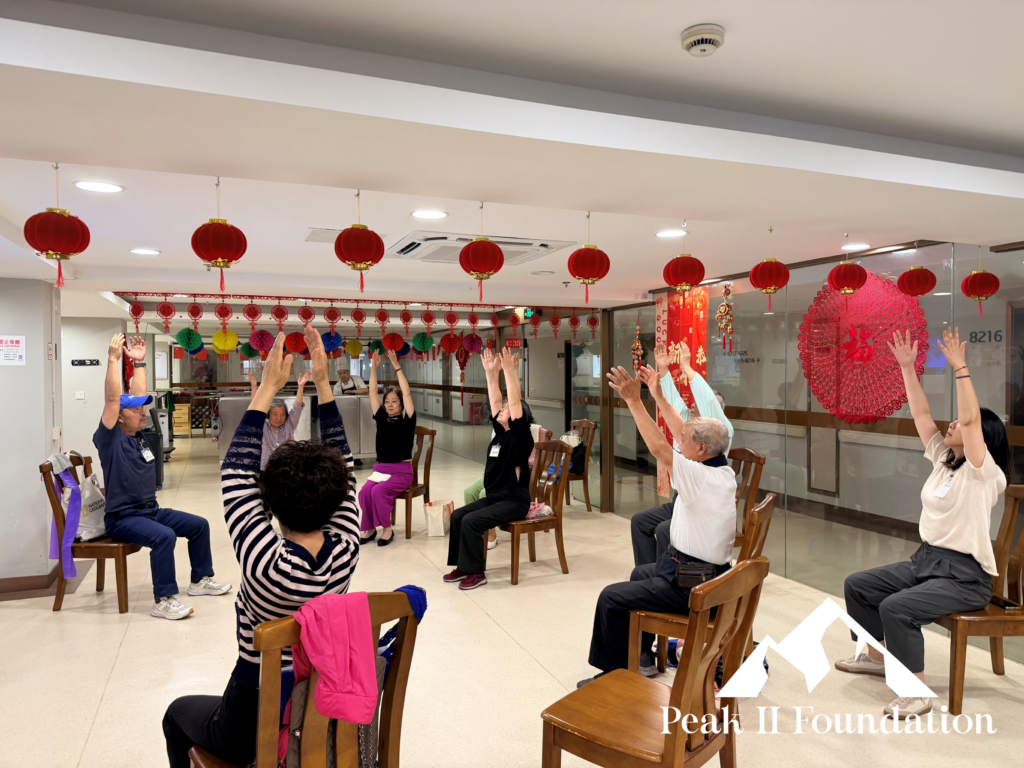
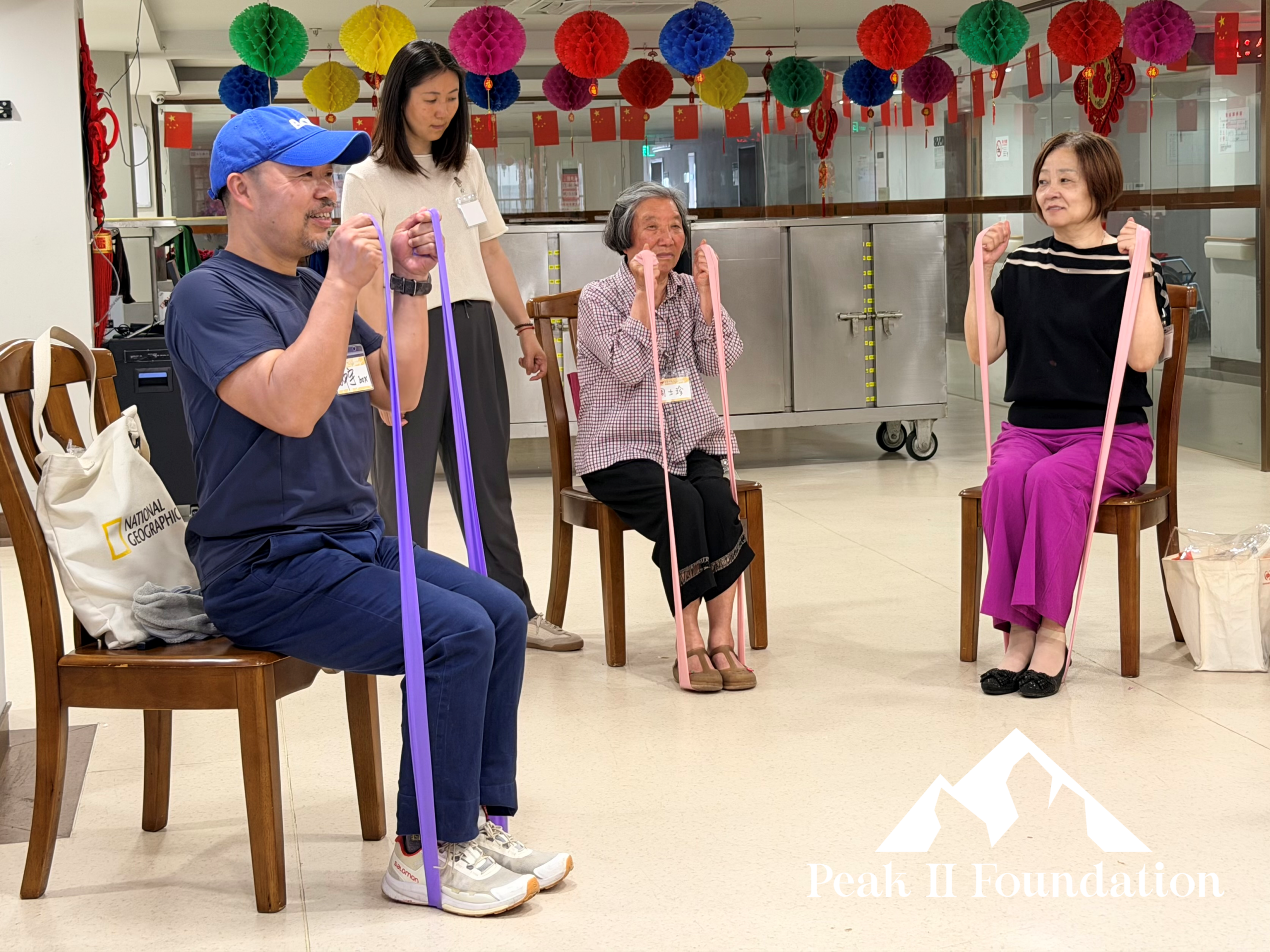
The curriculum covers frailty self-assessment, nutrition and exercise, chronic disease management and psychological support, delivered in the community under a model of shared mind-body practice, community empowerment and technology support.
Twelve weeks, once a week
The community course began on 18 March 2026 at the same centre: once a week, for twelve weeks. Twelve learners per class, led throughout by a certified coach, with a health-status assessment before the course and again after it.
The eligibility line is telling: open to those who can still manage daily activities independently and are willing to try light exercise. That is prevention before intervention turned into a rule — the course is not looking for elders who have already lost independence, but for those who still have reserves and are quietly declining. The forty per cent.
Twelve weeks, once a week. Prevention is hard not because it is difficult to understand, but because it demands repetition. Muscle does not grow from having attended a lecture.
Peak II Foundation has been a long-term supporter of Golden Dreamers. What we value, as with the Digital Life course, is not any single session but the system: coaches trained before classes open, a cap on class size, an assessment at both ends — a structure that can move to another district, another cohort, and run again.
Prevention is another kind of care — the kind that begins before care is needed.
跌倒,不是意外
肌肉、蛋白質,與十二週——記金色夢想家《健康同行》計劃
日期: 2026年3月18日開班(教練培訓:2025年12月15至16日)
地點: 上海市長寧區小藍花市民中心(安化路123號)
許多家庭都有過這樣的一幕:長輩在家裡跌了一跤,眾人慌忙扶起,歸咎於地板、歸咎於一時不小心。上海真愛夢想公益基金會副秘書長兼助理秘書長、金色夢想家項目負責人張霞告訴我們的第一件事,恰恰是推翻這個想法——長者跌倒,往往不是意外,而是症狀。多數時候,那是肌肉流失已到了支撐不住身體的地步。
《健康同行:社區長者衰弱管理計劃》由上海真愛夢想公益基金會金色夢想家項目推出,理念只有六個字:預防優於干預。據項目資料,中國城市社區約四成長者處於衰弱前期,是失能的高危人群;而孤立、衰弱的長者,往往身體衰退卻不願求助。延緩失能,可以大幅降低家庭與社會的照護成本。難處在於:預防發生在危機之前,無人喝采,亦無人看見。
三堂最基本的課
我們與張霞交流後,印象最深的,是課程裡三件聽似平常、實則顛覆習慣的事:
認識自己的身體。 教長者不要身體一有不適便跑醫院,而是先學會分辨:甚麼是正常老化,甚麼需要求醫。跌倒為何發生——因為沒有肌肉;而肌肉,可以透過簡單運動重新鍛鍊出來。
吃得對,而非吃得飽。 一餐吃飽不等於一餐吃夠。長者特別需要吸收蛋白質,課程教的是:如何在一碗飯之外,把該攝取的營養真正吃進去。
藥,不是記得就吃。 許多長期病患的長者,吃藥憑記性。課程教他們有效記錄、定時服藥——把「記得」變成一種可以被安排的事。
課程模組完整覆蓋衰弱自測、營養與運動干預、慢病共管與心理支持,依託「身心共練、社區賦能、科技輔助」的模式在社區常態化落地。
十二週,每週一次
2026年3月18日,社區課程正式開班,地點同在小藍花市民中心,每週一次,持續十二週。每班十二人,由受訓認證的教練員全程帶領,課程前後各進行一次健康狀態追蹤。
招生條件寫得很清楚:能夠獨立參與日常活動、願意嘗試輕度運動。這一句,正是「預防優於干預」由理念變成規則——課程所尋找的,並非已經失能的長者,而是尚有餘力、卻正在走下坡的那一群。也就是那四成人。
十二週,每週一次。預防之所以難,不在於難懂,而在於它要求重複。肌肉不會因為聽過一堂課而長出來。
崇嶺基金會是金色夢想家項目的長期支持者。我們所看重的,與《數字人生》一樣,不是某一堂課,而是這套可以換一個街道、換一批學員、再開一次的體系:先培訓教練,再開班;開班有人數上限,前後有評估。
預防,是另一種照顧——它發生在需要照顧之前。
— 崇嶺基金會 | 培力教育・提升未來