The Message That Can Be Taken Back
Nine days, four lessons, and twenty-odd elders in Hongkou
Date: 28 May 2026 (course concluded)
Location: Jiaxing Road Sub-district Citizens’ Station, Hongkou District, Shanghai
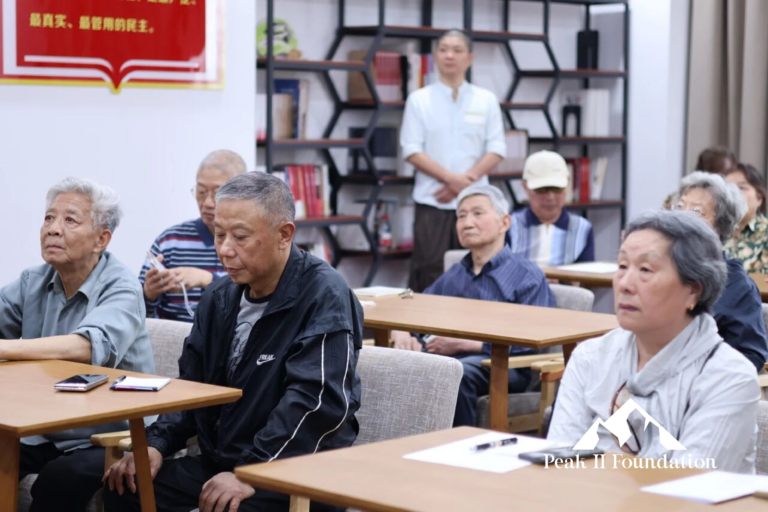
In a neighbourhood service station on Jiaxing Road, an older learner looked up from her phone and laughed. “So a message can be recalled after all. I don’t have to panic when my hands get flustered.” That one sentence is close to the reason we fund this work. She was not delighted by a feature. She was relieved of a fear — the fear of making a mistake in front of everyone, permanently.
Nine days, four lessons
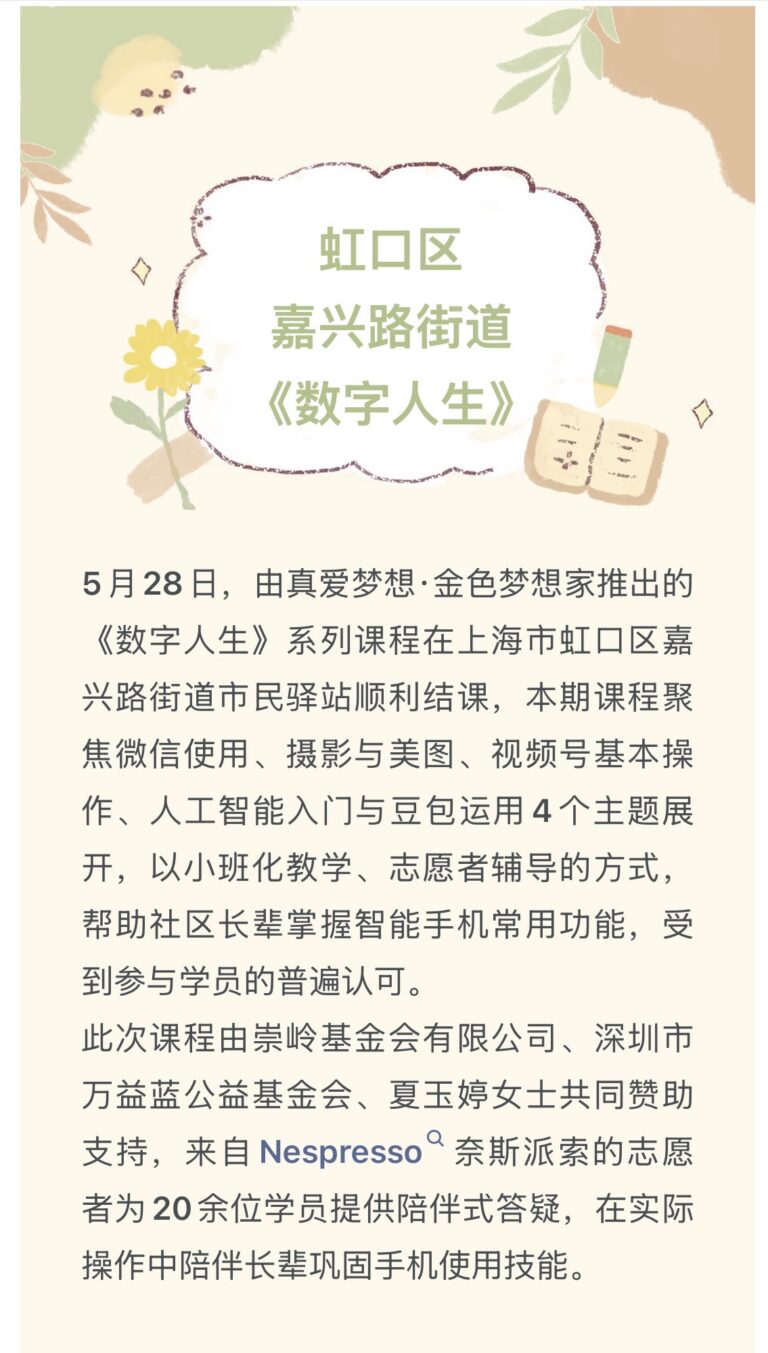
Digital Life (《數字人生》) was developed by Adream Foundation for older learners, and delivered here under its Golden Dreamers programme. This run began on 19 May 2026 and concluded on 28 May: four sessions, small-group teaching, volunteer tutors moving between desks, just over twenty participants.
The four topics, in order: WeChat basics; mobile payment and fraud awareness; short video and phone photography; an introduction to artificial intelligence.
Three things the syllabus quietly gets right
It begins with legibility, not capability. The first lesson teaches no new skill. It turns on accessibility mode and clears the cache — larger type, a cleaner screen. Before anyone is taught to do more, they are helped to see.
Payment and fraud are taught in the same session. You cannot hand someone a transit QR code and a shopping app without also handing them the habit of suspicion.
AI comes last. It would have been the easiest thing to lead with. It was placed fourth — after messaging, after payments, after photography. The order is the pedagogy.
By the third session, learners had opened their own video accounts and, with a volunteer beside them, added music, edited, and published a first piece of work. Nine days separate a message can be recalled from I made this.
What we are funding
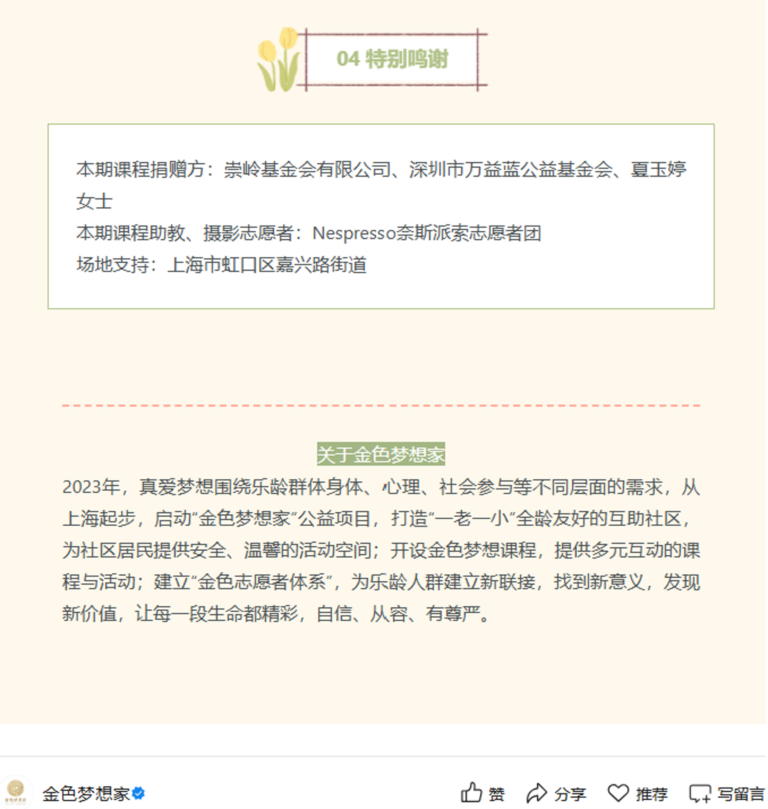
Peak II Foundation was one of three donors to this run. We are not funding devices, and not an afternoon. We are funding a curriculum and a volunteer system that can be run again — in another district, with another cohort, by tutors who did not write it. That is the part that survives the closing ceremony.
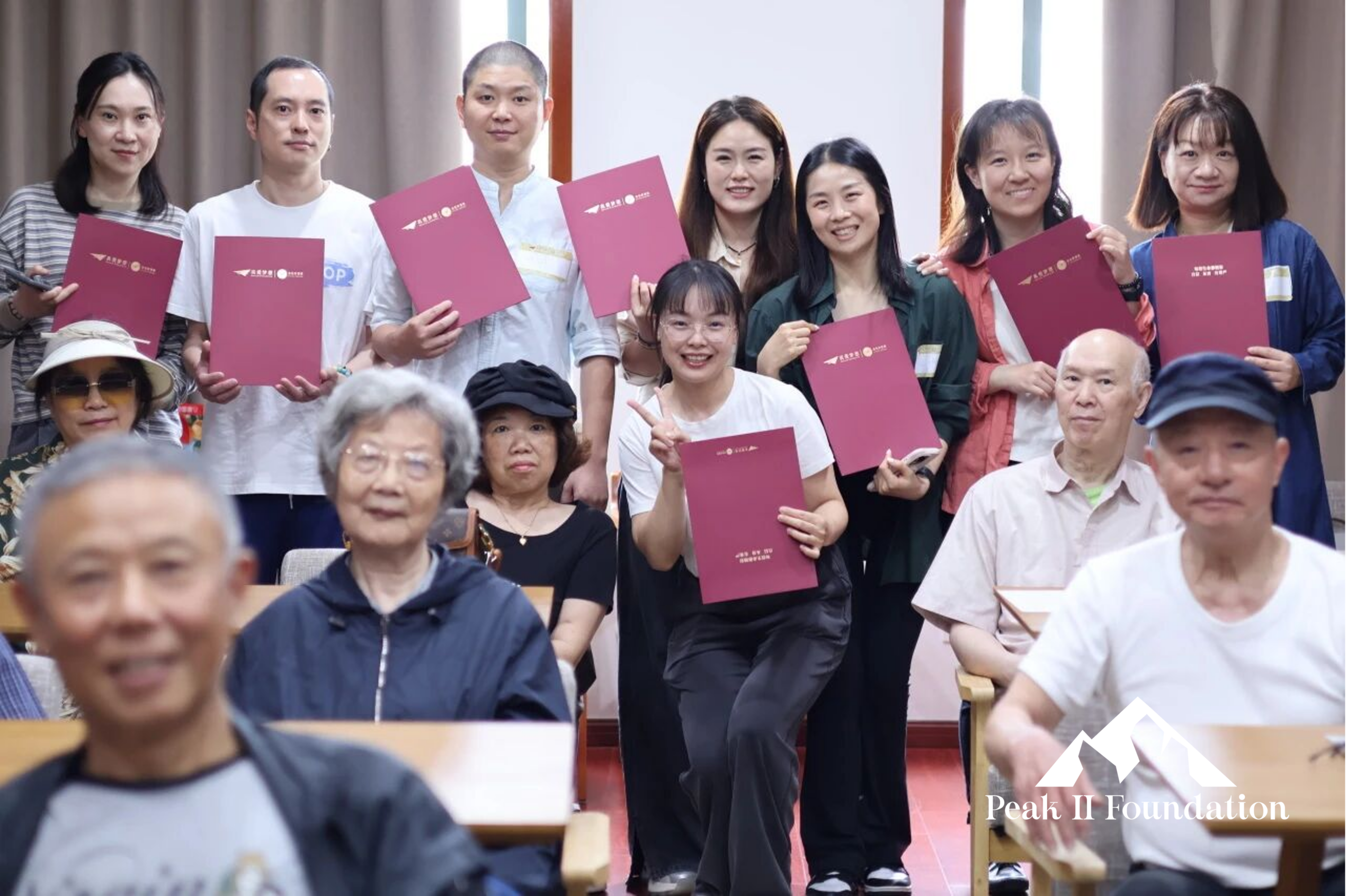
When the course ended, the learners asked for a more advanced class. One of them put it plainly: Technology moves so quickly now. We have to keep learning too — attend more classes, practise more, and slowly keep pace with the times.
They did not ask the times to slow down. They asked for the next class.
About Our Partner
Shanghai Adream Foundation — Runs the Golden Dreamers programme, bringing learning and companionship to older adults across China.
日期: 2026年5月28日(課程結業)
地點: 上海市虹口區嘉興路街道市民驛站
撰文: 崇嶺基金會
在嘉興路街道的市民驛站內,一位長輩從手機屏幕上抬起頭來,笑了。「原來訊息發錯了還能撤回,再也不用擔心手忙腳亂了。」這一句話,已相當接近我們資助此事的緣由——她所歡喜的並非一項功能,而是一種恐懼的解除:在眾人面前犯錯,且無從挽回的那種恐懼。
九日,四堂課
《數字人生》由上海真愛夢想公益基金會研發,專為樂齡人士設計,此次於其「金色夢想家」項目下開課。5月19日開課,5月28日結業;四堂課、小班化教學、志願者穿梭於座位之間輔導,學員二十餘位。
四個主題,依次為:微信基礎使用;支付與反詐;視頻號與手機攝影;人工智能入門。
課程設計中三處安靜的正確
由「看得清」開始,而非由「做得到」開始。 第一堂課並未教授新技能,而是打開關懷模式、清理緩存——字體放大、界面清朗。在教人做得更多之前,先讓人看得清楚。
支付與反詐,同置一堂。 既然要把乘車碼與購物程式交到長輩手中,就必須同時把警覺一併交給他們。
人工智能排在最後。 以此開場本是最容易討好的做法,然而它被安排在第四堂——在通訊之後、在支付之後、在攝影之後。次序本身,即是教學法。
至第三堂課,長輩們已開通視頻號,在義工陪伴下完成配樂、剪輯,發布了第一件作品。由「原來訊息可以撤回」到「這是我做的」,相隔九日。
我們所資助的是什麼
本期課程的捐贈方共三家:崇嶺基金會、深圳市萬益藍公益基金會,以及夏玉婷女士。助教與攝影義工來自Nespresso義工團體,場地由嘉興路街道支持。
我們所資助的並非器材,亦非一個下午,而是一套可以再次開課的課程與義工體系——換一個街道、換一批學員、換一批並未參與研發的導師,它依然運作得起來。這一部分,才是結業禮之後仍然留下來的東西。
課程結束後,學員主動提出希望能有進階課程。其中一位說得直白:「現在新技術發展這麼快,我們也要保持學習,多聽課、多練習,慢慢跟上時代的腳步。」
他們並未請求時代慢下來。他們所請求的,是下一堂課。
關於我們的夥伴
上海真愛夢想公益基金會 — 透過「金色夢想家」計劃,為內地長者帶來學習與陪伴。
— 崇嶺基金會
培力教育・提升未來