A personal reflection after the Adream Foundation Public Forum (sponsored by Peak II Foundation · Hong Kong — Elva Leung
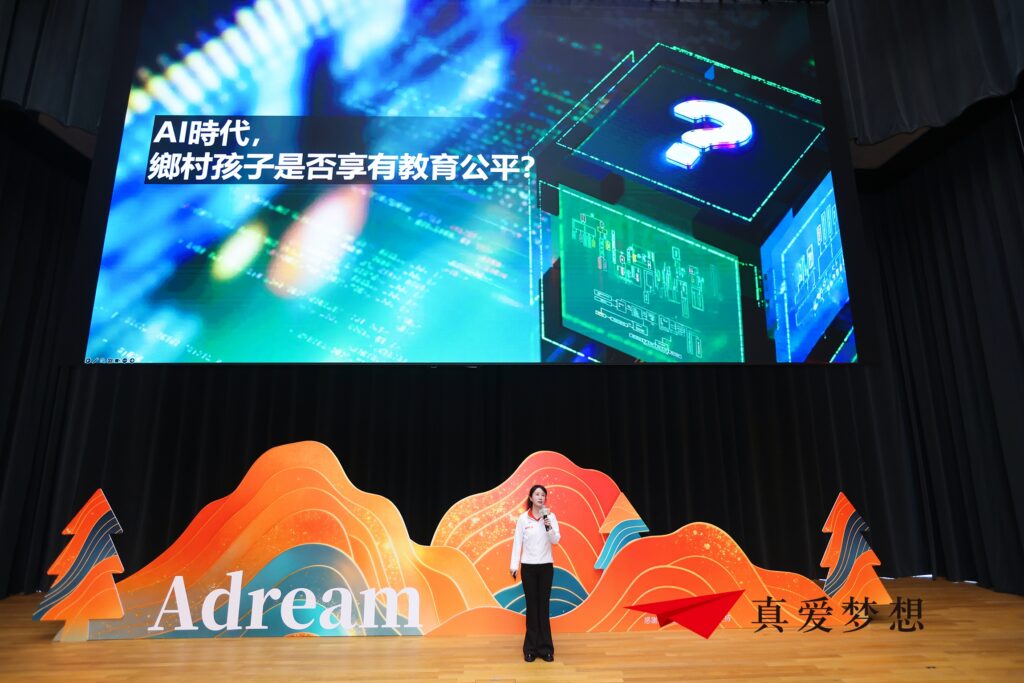
This was a public forum hosted by the Adream Foundation , returning to Hong Kong for the first time in more than ten years. Because Peak II Foundation was this year’s sponsor, I had the rare chance to look more closely at how Adream actually works — and to feel, first-hand, the convictions that guide their approach to education.
What moved me most during the forum was a reminder I needed: the world keeps advancing, and yet there are still places where children do not even have the most basic chance to read and learn. Set against that, the resources and choices we take for granted suddenly feel precious. And it deepened my gratitude — for the people and the quiet goodwill that keep pushing education forward and keep watch over children’s futures.
I was especially struck by Adream’s view on the balance between education and AI. They hold to three ethical principles:
Safe, controllable, human-centred;
AI as assistant, not replacement;
Pragmatic and inclusive — never chasing technological spectacle.
Hearing this, I felt that technology only becomes warm and directional when it truly serves people, rather than overruling them.
Their philosophy of an “education of love” moved me even more. I realised that love is not just a gentle word — it is a capacity. A capacity that helps a child build a good relationship with themselves, with others, and with the world. Self-awareness, speaking well, listening well, seeing other people, holding gratitude — these may sound simple, but they are, in truth, the very lessons that every adult is still trying to learn.
In an age flooded with information and shaped by AI, what is truly scarce is no longer knowledge — it is the ability to discern what is true. It is no longer tools — it is the clarity and steadiness not to be pulled along by them. This forum left me with a clearer sense that the essence of education has never been the transfer of knowledge alone. It is the cultivation of the heart and the shaping of character.
I am grateful to have seen another possibility of what education can be. And I came away with a deeper conviction —
Whether we are talking about technology, education, or philanthropy, all of them should return to the same centre:
helping people become more loving, more wise, and more capable of treating themselves, others, and the world with kindness.
在 AI 時代,我重新理解了「教育」
寫於上海真愛夢想公益交流會(崇嶺基金會贊助 · 香港)之後— Elva Leung
這是由上海真愛夢想公益基金會舉辦的公益交流會,睽違十多年,再一次在香港舉行。因為這次交流會由崇嶺基金會贊助,讓我有機會更深入地瞭解真愛夢想基金會的運作,也得以親身感受他們在教育上的理念與堅持。
交流會中最觸動我的,是再一次看見:世界雖然一直在進步,但仍然有些地方的孩子,連最基本的讀書機會也未必擁有。相比之下,我們所擁有的資源與選擇,其實已經非常珍貴。也正因如此,更讓我感恩這些默默推動教育、守護孩子未來的團體與善念。
聽到他們對教育與 AI 平衡的看法,我感受很深。他們堅守的 AI 倫理三原則——
安全可控、以人為本;
AI 輔助而非替代;
務實普惠、不追技術噱頭。
——讓我覺得,科技若能真正服務人,而不是凌駕於人,那才是有溫度、有方向的進步。
而他們提出的「有愛」教育理念,也讓我特別有感觸。原來「愛」不只是一句溫柔的說話,而是一種能力——一種讓孩子學會與自己、與他人、與世界建立良好關係的能力。自我覺察、好好說話、好好傾聽、看見別人、心懷感恩——這些看似簡單的能力,其實正是我們每一位成年人,也在努力學習的功課。
在這個資訊爆炸、AI 盛行的時代,真正稀缺的,不是知識,而是分辨真相的能力;不是工具,而是如何不被工具牽著走的清明與定力。這次交流讓我更加明白,教育的本質從來不只是知識的傳遞,更是心靈的培養、品格的建立。
感恩讓我有機會看見教育的另一種可能,也更深刻地感受到——
無論是科技、教育,還是公益,最終都應回到同一個核心:
讓人更有愛、更有智慧,也更有能力去善待自己、他人與世界。