When Children Speak, Are We Ready to Listen?
Reflections on expression, care and emotional learning at Not a Gallery’s exhibition
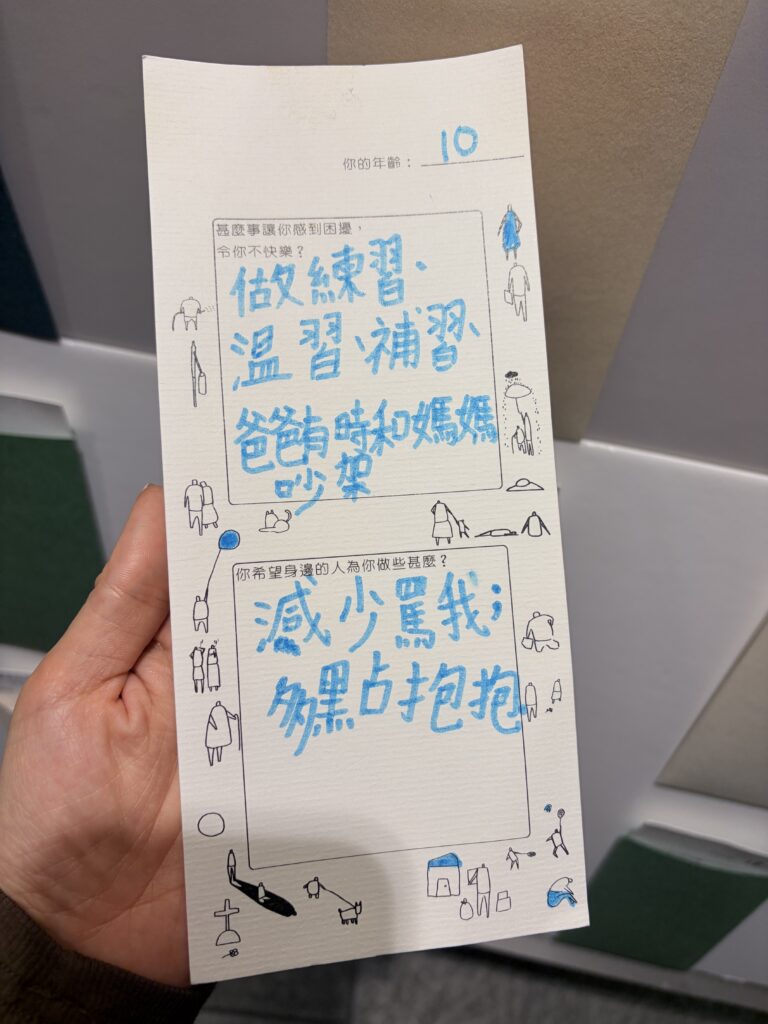
During my visit, I photographed a handwritten response card.
The age field read “10.” The concerns included schoolwork, revision, tutoring and arguments between parents. What the writer wanted from those around them was less scolding and more affection.
One card cannot tell us someone’s whole life or explain a family’s circumstances. But it made me pause: when we pay close attention to children’s learning, do we pay equal attention to whether they feel understood?
More Than One Card
Not a Gallery’s exhibition brings together anonymous handwritten reflections from children and adults. According to TOPick, the project has collected more than 4,000 cards through exhibitions at different venues since late 2023, with over 2,000 on display at Eslite in Causeway Bay.
That context changed how I thought about what I was seeing.
The exhibition does more than invite us to read about unhappiness. It asks whether everyday life leaves enough room for people to express feelings before they have worked out how to explain them.
For me, its value is not in finding the most heartbreaking card. It is in noticing needs that might otherwise pass unheard.
Expression Needs a Response
The card asks not only what is troubling the writer, but also what they would like people around them to do.
I appreciate that shift. It moves beyond identifying a problem and brings the relationship into view: how would you like me to be here for you?
We can be quick to offer advice, make a plan or explain why things are not so bad. I want to remember that care does not always have to begin with a solution.
Sometimes, another question may be more useful:
“Would you like me to listen first, or think through it with you?”
This is not a formula guaranteed to work. It is a reminder not to decide what someone needs before they have finished speaking.
Adults Belong Here Too
The exhibition also includes adults’ reflections on life and growing up.
I do not want to turn this visit into another checklist of things parents should do better. Instead, I wonder whether adults who feel exhausted or uncertain also have somewhere to speak.
Can we take children’s feelings seriously while making support available to the people caring for them?
That does not remove adult responsibility. It means I do not want emotional education to become another exercise in blame.
I hope we can practise acknowledging our own limits while remaining attentive to someone else’s experience.
Different Ways into a Conversation
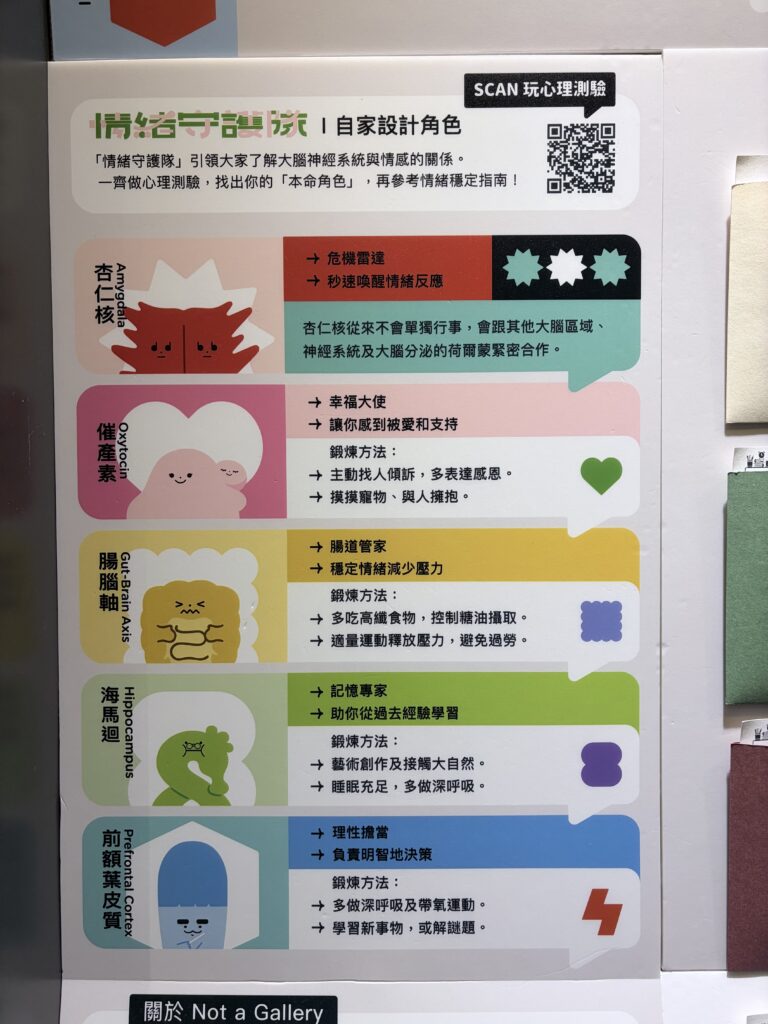
The exhibition’s illustrated “emotional guardians” introduce concepts relating to emotion, including the amygdala, prefrontal cortex, hippocampus, oxytocin and gut–brain axis.
I see these characters as invitations to conversation, rather than answers that define who someone is.
Not everyone wants to explain their feelings directly. Some may begin with an illustration, a written sentence or simply reading quietly.
For me, art matters here because it offers different ways to express and encounter feelings, without requiring everyone to speak in the same way.
After We Leave
As I read the cards, I reminded myself that an anonymous expression is not a diagnosis or a representative account of all children’s lives.
We can be moved without inventing the rest of someone’s story. We can share our reflections without reducing another person’s feelings to an emotional social-media moment.
What I want to take home is modest: pause before correcting, ask before advising, and find out what kind of care the other person would welcome.
When thinking about education, I often focus on courses, skills and opportunities. This visit reminded me of another kind of learning: adults learning to listen, and children knowing they do not have to achieve something first to deserve care.
Alongside “What did you learn today?”, there is another question I want to remember:
“Was there anything today you wish I knew?”
Visiting Information
Exhibition:《不快樂的心聲告白》
Organiser: Not a Gallery
Until: 29 November 2026
Hours: Daily, 10am–10pm
Venue: Exhibition area, Eslite Bookstore, 9/F, Hysan Place, Causeway Bay
Admission: Free
當孩子願意說,我們準備好聽嗎?
參觀 Not a Gallery《不快樂的心聲告白》,重新思考表達、陪伴與情緒教育
參觀展覽時,我拍下了一張心聲卡。
年齡欄寫着「10」。卡片列出的困擾,包括練習、溫習、補習,以及父母之間的爭吵;對身邊人的期望,則是少一些責罵、多一些擁抱。
一張卡片不能告訴我們一個人完整的生活,也不足以讓我們判斷一個家庭。但它讓我停下來思考:當我們很關心孩子的學習進度,有沒有同樣留意,他是否感到被理解?
不只是一張卡片
由 Not a Gallery 策劃的《不快樂的心聲告白》,透過匿名手寫卡,呈現學童及成年人不容易說出口的感受。據 TOPick 報道,項目自2023年底起在不同場地展出,累積收集超過4,000張心聲卡,今次在銅鑼灣誠品展出逾2,000張。
這個背景,讓我重新理解眼前的展覽。
它不只邀請我們閱讀別人的不快樂,也提出一個問題:在日常生活中,我們有沒有留下足夠的空間,讓人不用先整理好情緒,就可以開始表達?
對我而言,展覽值得關注的,不是找出哪張卡最令人難過,而是看見那些平日容易被忽略的需要。
表達之外,還需要回應
心聲卡的設計,不只問參加者有甚麼困擾,也問他們希望身邊的人怎樣做。
我很喜歡這個提問方向。
它沒有把注意力停留在「你有甚麼問題」,而是把關係帶回來:當你不開心時,我可以怎樣陪你?
我們有時會很快提供答案——安排時間表、提出建議,或告訴對方事情沒有想像中嚴重。但我希望自己記得,關心不必每次都以解決問題開始。
有時可以先問:
「你想我先聽你說,還是一起想辦法?」
這不是一套保證有效的說話技巧,而是提醒自己,不要在對方還未說完之前,已經替他決定需要甚麼。
大人也在這個展覽裡
展覽收集的並不只有孩子的心聲,也包括成年人對生活與成長的回望。
因此,我不希望把這篇參觀記錄寫成另一份要求父母做得更好的清單。
我更想問:當大人自己也感到疲倦、不知所措時,有沒有地方可以說?我們能否在重視孩子感受的同時,也讓照顧者獲得理解與支援?
這不代表忽略大人應負的責任,而是不把情緒教育變成另一場互相責備。
我希望我們可以練習兩件事:承認自己的限制,也認真對待別人的感受。
讓情緒有不同的入口
現場的「情緒守護隊」,以不同角色介紹杏仁核、前額葉皮質、海馬迴、催產素及腸腦軸等與情緒相關的概念,並配合互動內容,邀請參觀者認識自己。
我更願意把這些角色看成開啟對話的入口,而不是用來替人分類的答案。
不一定每個人都習慣直接說出感受。有些人可能先被一幅插畫吸引,有些人願意寫下一句話,有些人只是站着閱讀。
對我而言,藝術在這裡的價值,是讓表達有不同的形式,而不必要求每個人都用同一種方式說明自己。
看見之後,如何繼續?
閱讀這些匿名心聲時,我也提醒自己:我們看見的是一段表達,不是一份診斷,更不是全港孩子的共同答案。
我們可以被觸動,但不需要替書寫者補上一段人生;也不應只把他們的感受,變成社交媒體上一個催淚的瞬間。
如果把參觀後的反思帶回生活,我想從很小的事情開始:少一點急着糾正,多一點耐心;給建議之前,先確認對方是否需要;想表達關心時,也問問對方怎樣才感到舒服。
一直關注教育,我常常想到可以提供甚麼課程、培養哪些能力。這次參觀則提醒我,教育也包括大人學習如何聆聽,以及讓孩子知道,他不必先表現出色,才值得被關心。
下一次,除了問「今天學了甚麼」,我也想記得問:
「今天,有沒有甚麼事,你想讓我知道?」
展覽資訊
展覽:《不快樂的心聲告白》
主辦:Not a Gallery
展期:至2026年11月29日
時間:每日上午10時至晚上10時
地點:銅鑼灣希慎廣場9樓誠品書店展位
費用:免費