
From Waste to Blessing: Two Afternoons of Food Rescue
Learning to Feed a City
Twice this summer, I joined a local food-rescue initiative — as a volunteer, on my own time — helping to distribute rescued food to families in need.
The first time, I came expecting to sort bags and hand out groceries. I left with something much larger to carry. The second time, I understood why I had come back.
What I saw
Out of respect for the privacy of the families we met, this piece carries no photographs. What I can share is the quiet choreography of two afternoons that ran on care.
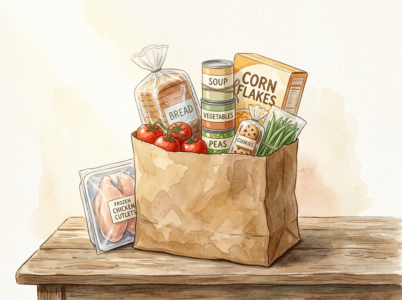
I saw fresh tomatoes, ripe and red, arranged alongside loaves of frozen sliced bread. I saw canned soups and beans stacked in neat rows, boxes of breakfast cereal, small packets of biscuits, and frozen chicken cutlets — a full grocery bag, thoughtfully assembled, that could carry a family through several meals. None of it had been destined for a shelf that day. All of it had been rescued from becoming waste.
I saw volunteers of every age moving in a practised rhythm, and staff who greeted each recipient by name.
I saw a grandmother pause to thank a volunteer twice — once for the food, and once, more softly, for the eye contact.
That second thank-you is what I came home thinking about.
Three transformations
Food, transformed.
What would have been waste — surplus, imperfect, or simply approaching its date — became a full meal on someone’s table. Nothing about the food had changed except its destination.
Neighbours, transformed.
The families I met on both mornings did not arrive as recipients of charity. They arrived as neighbours picking up groceries — with dignity, with unhurried conversation, with the ordinary rhythm of a market morning. Hardship does not have to be lonely. That, too, is transformation.
A city, transformed.
Every kilogram of food rescued is a kilogram of CO₂ emissions that never enter our air. The mathematics of kindness turns out to be the mathematics of climate, too. Feeding a neighbour and cooling the planet are, on these mornings at least, the same act.
What I learned
Food banking is not simply the redirection of surplus. It is a piece of civic infrastructure — quiet, unglamorous, essential — that treats a city’s food system as one shared table.
I came away with a clearer understanding of three things:
Waste is a design choice, not an inevitability. With the right logistics, most of what is thrown away could still nourish someone.
Poverty in Hong Kong is closer than the statistics let on. It sits at the next MTR station. It queues politely. It thanks you twice.
Volunteering is not a favour we offer. It is a lesson we receive. I arrived thinking I was helping. I left knowing I had been taught.
A personal note
I share this reflection in my personal capacity. It is not, at this stage, a Peak II Foundation partnership or endorsement. As a foundation, we take our time — studying an organisation’s mission, governance, and impact carefully before we commit alongside them.
What I can say today, as one volunteer among many, is that the two afternoons I spent moved me — enough that I went back a second time before I had finished thinking about the first. If the further work confirms what my hands and heart already suspect, I hope Peak II may one day walk alongside this kind of quiet, essential work in a more formal way.
Until then, I offer only what any one of us can offer: an afternoon, a pair of hands, and an open heart — and, when the morning is over, the willingness to return.
A short note on why this page carries no photographs:
Real care is not only making someone visible. Sometimes, it is the quiet act of holding them safely out of view.
今年夏天,我兩度以個人義工身份,參與本地一個食物救援行動,協助向區內有需要的家庭派發獲救的食物。
初次出門之前,我以為只是分裝食物、遞出一袋乾糧。回程時,卻帶著遠比一袋食物沉重的東西。而第二次前往之際,我方明白自己為何會再來。
出於對街坊私隱的尊重,本文並無現場照片。我能夠分享的,是那個由「用心」二字所編排的兩個雨下午。
我看見鮮紅飽滿的蕃茄,與一條條冷藏的切片麵包一同分裝;我看見一罐罐蔬菜湯、豆類罐頭整齊排列,還有麥片、曲奇餅、冷藏雞扒——一袋精心配搭的糧食,足以陪一個家庭走過好幾天的餐桌。這些食物,原本沒有一樣是為了走上店舖貨架的當日重新上架而準備的;它們每一樣,都是從「即將成為廢棄物」的邊緣,被救回來的。
我看見不同年齡的義工以熟練的節奏穿梭;同工向每一位到訪的街坊直呼其名。
我看見一位婆婆停下腳步,向義工道謝兩次——一次為食物,另一次,聲音更輕,為那份對望的眼神。
回程路上,我始終想著的,是那第二聲道謝。
三重轉化
食物的轉化。
本應成為廢棄物的食材——盈餘、外形略有瑕疵、或僅僅接近最佳食用日期——化為某人餐桌上的一頓完整晚餐。食物本身並無改變,改變的,只是它的去向。
街坊的轉化。
兩個上午所遇見的街坊,並非以「受助者」的姿態走進門。他們是來領取糧食的街坊——有尊嚴、有從容的交談、有市場清晨那種尋常的節奏。艱難不必然孤獨。這,也是一種轉化。
城市的轉化。
每一公斤獲救的食物,便是一公斤未進入大氣的二氧化碳。善意的算式,原來同時也是氣候的算式。餵飽一位鄰居與冷卻一顆星球,至少在這兩個上午,是同一個動作。
我學到的
食物救援並非單純的「剩食再分配」。它是一種公民基礎建設——安靜、樸實、卻不可或缺——將整座城市的食物系統,視為一張共同的餐桌。
這兩個上午,讓我對三件事有了更清晰的體會:
廢棄,是一種設計的選擇,而非必然。 只要物流妥善,大部分被丟棄的食物,仍然足以餵養一個人。
香港的貧窮,比統計數字所呈現的更接近我們。
做義工並非我們給予的一份恩惠,而是我們接受的一堂課。 我以為自己是去幫忙的,離開時方明白:其實是我被教導。
說明
我以個人身份分享這份體會。此刻,這並非崇嶺基金會的合作項目或正式支持。作為一個基金會,我們慣於慢慢來——仔細研究一個機構的使命、治理、及影響力之後,才作出並肩同行的承諾。
我今天能說的,僅是作為眾多義工之中的一員:那兩個上午所見所感,深深觸動了我——深到我尚未想清第一次的體會,便已再一次前往。倘若日後的了解印證了我此刻雙手與內心的直覺,我盼望崇嶺基金會有一日,能以更正式的方式,與這一類安靜、卻不可或缺的工作同行。
在那日到來之前,我只獻上任何一位普通人皆能獻上的——一個下午、一雙手、一顆敞開的心——以及下午結束之後,願意再次前來的那份心意。
關於本文為何不附照片:
真正的關懷,不僅在於讓人被看見;有時,正是靜靜地,將他們妥善地留在鏡頭之外。
